Ladies Knit Tops have become a dependable choice for buyers seeking comfort, flexibility, and year-round appeal. Their soft texture suits daily wear, office layering, travel, and relaxed weekends. A lightweight ribbed top can fit beneath a blazer without adding visible bulk. A heavier knit can provide warmth during cooler seasons.
From a sourcing perspective, their popularity comes from practical design. Buyers can select cotton, viscose, wool blends, or recycled fibers for different markets. They also compare knit gauge, stretch recovery, seam strength, colorfastness, and pilling resistance. These details influence customer satisfaction after repeated washing. Reliable suppliers should provide accurate fiber labels, consistent measurements, and transparent production information. Testing remains important.
It is easy to call Ladies Knit Tops a universal bestseller. That claim needs care. Climate, cultural preferences, body shapes, and price expectations vary widely. Some buyers prefer loose silhouettes, while others demand fitted cuts and long-lasting elasticity. My experience suggests that successful collections balance familiar shapes with small seasonal updates, such as contrast cuffs or textured stitches. Still, no design works everywhere. A beautiful sample may lose its shape in production. A popular color may perform poorly in another region. Careful sampling, wear testing, and feedback from local buyers create stronger decisions. The appeal is real. The conclusion is not automatic. Brands that respect quality, fit, responsible materials, and honest product communication are more likely to earn lasting trust.
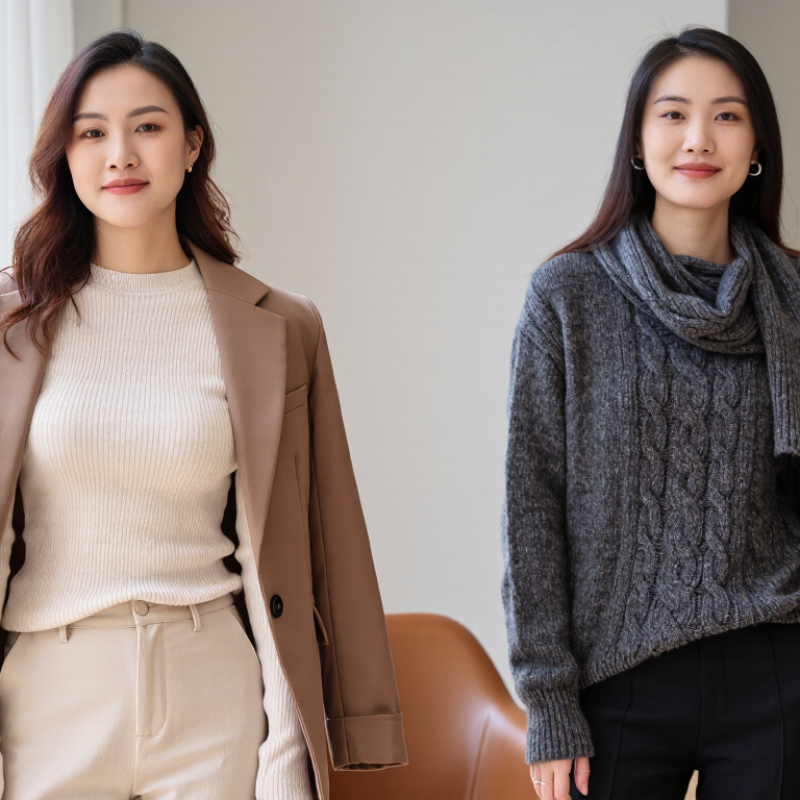
Ladies’ knit tops are defined by construction, not merely by a soft appearance. Knitted loops create natural stretch, recovery, and breathable movement. Their gauge controls surface density. Fine gauges look smoother, while chunky gauges feel warmer and more textured. Common fibers include cotton, viscose, wool, and synthetics, often blended for balance. Textile Exchange’s Materials Market Report 2024 estimates global fiber production reached 124 million tonnes in 2023. That scale increases material choice, but also raises sourcing questions.
In buying reviews, I examine stitch stability, spirality, pilling resistance, seam comfort, and shrinkage after washing. Fit matters too. Shoulder width, sleeve opening, hem tension, and neckline recovery shape daily wear. Grand View Research estimates the global knitwear market could expand at about 5% annually through 2030. This forecast reflects demand, not guaranteed quality. A low-priced top may perform well. An expensive one may disappoint. That distinction deserves attention.
Tips: Check the care label and fabric composition before ordering. Stretch the neckline gently, then watch its recovery. Inspect inside seams under bright light. For warm climates, choose lighter gauges and breathable blends. For layering, test sleeve bulk beneath a jacket. Product charts help, but they can miss body-shape differences. Read wash-test feedback, not only first-wear comments.
Knit tops attract buyers because they combine everyday comfort with practical styling. Their stretch follows body movement, whether someone commutes, works, or travels. A soft jersey top can feel suitable in warm Singapore and layered under a jacket in Canada. That flexibility supports repeat purchasing across different markets.
Experienced buyers usually inspect more than appearance. They check fabric recovery after stretching, seam strength, shrinkage, pilling resistance, and colorfastness. A 180–220 GSM knit often offers a useful balance between coverage and breathability. However, fabric weight alone cannot guarantee comfort. Fiber content, yarn quality, finishing, and local climate also matter. Small details matter.
Fit creates another strong appeal. Buyers often prefer relaxed shoulders, smooth necklines, and hems that stay in place. Clear size grading reduces confusion between regions. During wear testing, I once found that a comfortable sample became restrictive after washing. The problem was not the pattern. It was poor fabric recovery. That experience changed how I assess knit tops.
Global buyers also value dependable production and transparent specifications. They may request test records, measurement charts, care instructions, and consistent color references. These details help reduce returns and build purchasing confidence. Still, preferences are not universal. Some shoppers want lightweight layers, while others need opaque fabric and fuller coverage. A successful knit top leaves room for both needs.
Ladies’ knit tops remain popular because they combine practical fabrics with easy movement. In my sourcing experience, cotton blends offer softness, breathability, and dependable shape retention. Viscose creates a smooth drape and a cooler touch. Polyester can improve durability, color stability, and drying speed. However, fiber percentages matter. A fabric may feel soft initially but lose comfort after repeated washing. Small tests reveal more than attractive samples.
Design details strongly influence daily wear. Ribbed cuffs help sleeves stay in place without feeling restrictive. A shaped shoulder can improve fit and reduce fabric pulling. Crew necks suit layering, while V-necks create a longer visual line. Side slits add movement around the hips. Flat seams are useful for sensitive skin because they reduce friction. Not every detail works for every customer. Fit preferences change across markets, ages, and body shapes.
Comfort also depends on fabric weight, stretch recovery, and finishing quality. A lightweight knit suits warm climates, but it may show wrinkles or body lines. A medium-weight structure feels more secure and often lasts longer. Four-way stretch supports active movement, although excessive elastane can make a top feel tight. I once underestimated sleeve length during product evaluation. The garment looked balanced on a model but felt awkward during real movement. Wear testing, washing trials, and clear measurement records make buying decisions more reliable.
Key fabrics, designs, and comfort features influence the worldwide appeal of knit tops. Moisture regain is a useful textile indicator because fibers with higher values generally absorb more atmospheric moisture and can feel less clammy in everyday wear.
Cotton and viscose are valued for softness and moisture handling, while polyester and nylon support durability, easy care, and shape retention.
Crew necks, V-necks, relaxed fits, ribbed cuffs, and lightweight layering styles make knit tops adaptable across seasons and occasions.
Stretch recovery, breathable constructions, smooth seams, low-pilling surfaces, and machine-wash performance improve daily usability.
Data note: Typical moisture regain values are representative textile-fiber figures under standard atmospheric conditioning; viscose and wool values can vary by fiber grade and finishing.
Ladies Knit Tops: How Fashion Trends Shape Global Demand
Knit tops have moved beyond seasonal basics. Their soft stretch, breathable structure, and easy layering suit changing lifestyles. A shopper can wear a ribbed top under a blazer in London, then style it with loose trousers in Singapore. This versatility supports international demand.
Fashion trends also travel faster through social media and digital retail. WGSN’s consumer research highlights comfort, adaptability, and longer-wearing products as important purchase motivations. These preferences directly support knitted silhouettes. The Business of Fashion and McKinsey’s State of Fashion 2025 report forecasts low single-digit global fashion growth, making practical products more valuable in a cautious market. Buyers are not only chasing novelty. They are measuring cost per wear.
Material choices matter. The Textile Exchange Materials Market Report 2024 shows polyester remains the most widely produced fibre globally, while recycled fibre adoption continues to expand. This creates opportunities for lighter, textured, and lower-impact knit designs. Yet sustainability claims require evidence. A recycled label alone does not prove responsible production. Buyers increasingly expect traceability, reliable sizing, and clear care instructions.
Regional taste still complicates the picture. Some customers prefer fine-gauge, office-ready tops, while others choose oversized shapes and bold texture. Forecasting cannot be perfect. Weather shifts, inflation, and sudden micro-trends can quickly change demand. That uncertainty is frustrating, but it encourages better local research and smaller, more flexible product planning.
| Demand Dimension | Verified Global Indicator | Why It Supports Knit Tops | Current Fashion Direction | Buyer Implication | Reference |
|---|---|---|---|---|---|
| Global consumer reach | Approximately 5.4 billion people used the internet in 2023, representing about 67% of the global population. | Online shopping and social discovery make visually simple, easily searchable products more accessible across markets. | Mobile-first browsing, short-form styling content and cross-border fashion discovery. | Use clear product photography, fit information, fabric descriptions and internationally understandable size charts. | International Telecommunication Union, Facts and Figures 2023 |
| Urban lifestyle demand | More than half of the world's population lives in urban areas; the global urban share was approximately 56% in 2022. | Urban consumers often need clothing that moves between commuting, work, social occasions and travel. | Polished casual dressing, layering and day-to-evening versatility. | Prioritize adaptable silhouettes, wrinkle resistance, easy care and neutral-to-seasonal color ranges. | World Bank, World Development Indicators |
| Comfort and movement | Knitted fabrics are constructed from interlocking loops, which generally provide greater stretch and flexibility than many comparable woven structures. | Stretch, softness and recovery support all-day wear and reduce restrictions around the shoulders, arms and torso. | Relaxed fits, soft-touch surfaces, rib details and comfort-focused tailoring. | Offer fabric-weight options, reliable stretch recovery and measurements for bust, shoulder and hem width. | International Organization for Standardization, textile terminology and test standards |
| Workleisure and casualization | Hybrid work has increased the importance of clothing that combines professional appearance with at-home comfort, although adoption levels vary by country and occupation. | Knit tops can look presentable while retaining the comfort associated with leisurewear. | Clean necklines, fine-gauge knits, minimal decoration and layering under jackets. | Develop products that can be styled for video meetings, offices, travel and informal occasions. | International Labour Organization, global working-arrangement research |
| Climate adaptability | Consumers shop across substantially different climate zones, from hot and humid regions to temperate and cold markets. | Knit structures can be produced in lightweight, breathable, midweight and insulating constructions. | Lightweight summer knits, transitional layers, sleeveless styles and long-sleeve layering pieces. | Build regional assortments by fabric weight, sleeve length, neckline and moisture-management performance. | World Meteorological Organization, global climate reporting |
| Layering versatility | Layering is a practical styling method because it allows consumers to adjust clothing to changing indoor and outdoor temperatures. | A knit top can function as a base layer, standalone garment or under-jacket piece. | Stacked necklines, cardigans, overshirts, blazers and tonal outfit coordination. | Create compatible color families and consistent sizing across sleeveless, short-sleeve and long-sleeve styles. | Common apparel design and merchandising practice |
| Inclusive fit potential | Stretch fabrics can accommodate a wider range of body movement and fit preferences, but stretch alone does not replace accurate grading or fit testing. | Well-engineered knit tops can provide comfort across different body shapes while maintaining a clean appearance. | Relaxed shaping, extended size ranges, longer lengths and body-conscious but non-restrictive fits. | Use regionally tested blocks, transparent garment measurements and fit notes for different body proportions. | International apparel sizing and fit-development practices |
| Care convenience | Knit garments can be designed for machine washing, quick drying and low ironing, depending on fiber content and finishing. | Lower-maintenance garments are attractive to consumers seeking frequent rotation and reduced wardrobe effort. | Easy-care blends, durable color, anti-pilling finishes and compact travel styling. | Publish tested care instructions and communicate pilling, shrinkage and colorfastness expectations accurately. | ISO textile care-labeling and performance-testing standards |
| Sustainability scrutiny | The European Union's textile strategy promotes longer-lasting, repairable, recyclable and more transparently produced textiles. | Knit tops can support repeat wear through durable construction, but fiber shedding, blending and end-of-life recyclability require careful design. | Mono-material concepts, recycled inputs, durability claims and traceable material information. | Document fiber composition, recycled content, durability testing and care guidance; avoid unsupported environmental claims. | European Commission, EU Strategy for Sustainable and Circular Textiles |
| Seasonless wardrobe value | Basic tops are used across multiple seasons and occasions, while fabric weight, sleeve length and layering determine climate suitability. | A versatile knit top can remain commercially relevant beyond a single fashion season. | Core neutrals combined with limited seasonal colors and updated necklines. | Balance continuity products with trend-led updates to reduce markdown and inventory risk. | Standard apparel merchandising and seasonal planning practice |
Note: Global indicators are rounded figures from the cited public sources. The product implications are derived from established textile, apparel-design and merchandising principles.
When buyers assess ladies knit tops, fabric performance often matters more than a fashionable first impression. A soft surface feels attractive, but softness alone can mislead. Buyers usually check fiber composition, fabric weight, stretch recovery, and pilling resistance. A top that loses shape after three washes creates returns and weakens customer trust. Practical testing should include washing samples under normal household conditions, not only reviewing a supplier’s specification sheet.
Fit is another serious consideration. Buyers compare shoulder width, sleeve balance, neckline stability, and size grading across different body types. A medium size may look suitable on one model but feel restrictive in real use. Care labels also need clear instructions and accurate fiber details. Small inconsistencies can cause confusion during retail distribution. They are easy to overlook.
Production reliability influences the final decision. Buyers examine sample quality, color consistency, stitching density, order flexibility, and delivery history. Neutral colors can reveal shade differences between production batches. Bright colors need dependable colorfastness testing. Responsible buyers also ask about workplace standards and material traceability. These checks require time, and some forecasts still fail. Consumer preferences can change quickly, especially when weather and local sizing expectations differ.
They offer stretch, softness, and easy movement. A commuter can wear one comfortably for hours. They also layer well in warm or cool climates.
Check fiber content, fabric weight, stretch recovery, and pilling resistance. A 180–220 GSM fabric can balance coverage and breathability. Weight alone proves little. Finishing and climate matter too.
Stretch the fabric repeatedly, then measure its return to shape. Wash the sample under normal household conditions. A top may feel comfortable before washing but restrictive afterward. That mistake is easy to miss.
Buyers often prefer relaxed shoulders and smooth necklines. Hems should remain stable during movement. Check sleeve balance and shoulder width across several body types. One model cannot represent everyone.
Body proportions and sizing expectations differ between regions. Clear measurement charts reduce confusion and returns. A medium size may fit one shopper but restrict another. Local testing helps, although it cannot remove every problem.
Social media spreads textures, silhouettes, and styling ideas quickly. Shoppers increasingly value comfort and repeated wear. A ribbed top may suit a jacket, while an oversized style suits loose trousers. Trends still change suddenly.
Ask for material traceability and evidence supporting recycled content claims. A recycled label alone does not prove responsible production. Request clear care instructions and reliable fiber details. Claims need proof.
Review sample quality, seam strength, color consistency, and delivery history. Test bright colors for colorfastness. Use neutral colors to reveal batch differences. Small inconsistencies can become costly returns.
Use smaller initial orders and flexible product planning. Study local weather, pricing pressure, and customer preferences. Forecasts can fail. That is frustrating, but it encourages better research.
Ladies Knit Tops are popular worldwide because they combine softness, flexibility, and everyday style in one practical garment. Typically made from knitted fabrics such as cotton blends, viscose, modal, or synthetic fibers, they are designed to provide stretch, breathability, and a comfortable fit. Their appeal extends across seasons and markets, with options ranging from simple crew necks and relaxed silhouettes to fitted styles, ribbed textures, decorative details, and layered designs.
Global fashion trends continue to influence demand for Ladies Knit Tops, encouraging buyers to explore versatile colors, updated necklines, sustainable material choices, and designs suitable for both casual and professional settings. Before choosing, buyers often consider fabric quality, durability, sizing consistency, color variety, comfort, production reliability, and the ability to match local preferences. These qualities make knit tops a dependable choice for consumers seeking fashionable clothing that is easy to wear, adaptable, and suitable for changing lifestyles.

FUJI