Knitted Ladies Tops can look similar on a hanger, yet feel very different after a full day of wear. A soft ribbed tee may stretch comfortably, while a loosely knitted pullover can lose shape at the elbows. Buying well means checking more than color and price. Yarn content, stitch density, seams, fit, and care instructions all matter.
The scale of textile production makes material choices worth a closer look. Textile Exchange’s Materials Market Report 2024 estimates that global fiber production reached 124 million tonnes in 2023, with polyester accounting for a large share. This report covers fibers across the textile industry, not knitted tops alone. Still, it offers useful context: the fiber label can tell shoppers something important about feel, care, and material impact. It cannot tell the whole story.
Look closely. Feel the fabric between your fingers. Check whether the neckline sits flat and the side seams hang straight. Fashion designer Vivienne Westwood’s well-known advice is, “Buy less, choose well, make it last.” That is a helpful principle, though durability also depends on construction and care—not just the label. A low price can be tempting. So can a polished product photo. Neither guarantees a good fit. The following ten tips will help you compare Knitted Ladies Tops with a more practical eye, from fiber blend and knit structure to sizing, finishing, and washing instructions. Some details are easy to miss. That is precisely why they deserve attention.
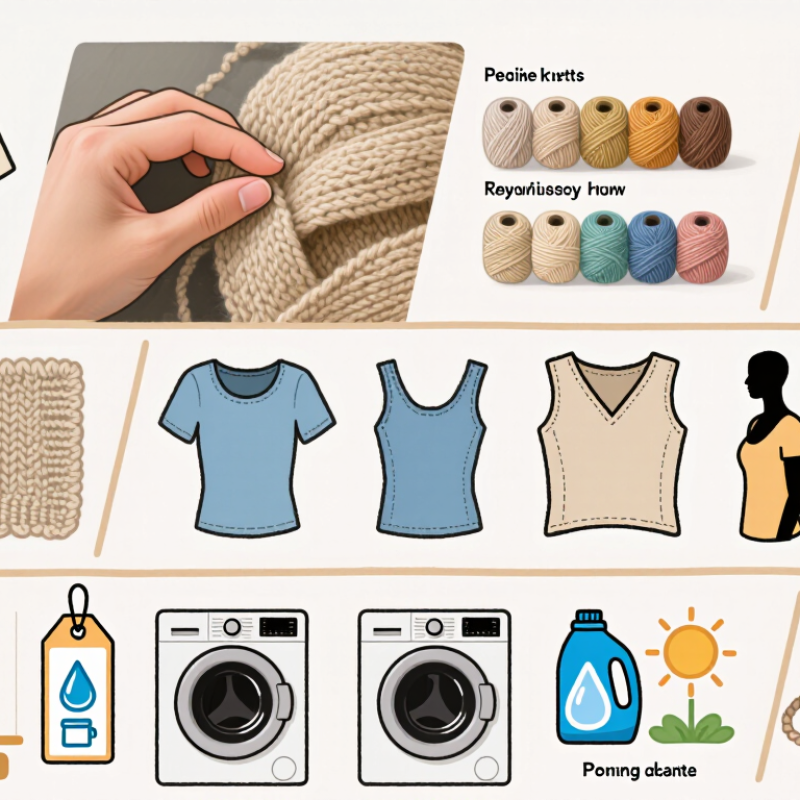
When buying a knitted ladies’ top, check the fiber label before relying on a soft touch or attractive color. In the United States, most covered textile garments must identify each fiber that makes up 5% or more of the garment’s weight. Smaller amounts may be grouped as “other fiber,” subject to labeling rules. The percentages give you a clearer picture of the fabric than a vague description like “cozy knit.”
Look at what those fibers mean for your routine. Cotton can feel breathable, while wool often provides warmth and may need gentler care. Synthetic fibers can add stretch or help a top hold its shape, but the knit structure matters too. A loose stitch may drape differently from a dense one, even when both tops list similar fibers. Check the care instructions beside the fiber content. They can affect how easily you wear and wash the garment.
I still sometimes judge a top by its hand feel first. That can be misleading. A smooth sleeve may feel lovely in the fitting room, then cling or change after washing. Check the label, stretch a small section gently, and inspect the cuffs for loose loops. If the fiber percentages are unclear, pause and ask the seller rather than guessing. A label informs your choice; it cannot promise how the top will feel on your body.
How to read this chart: This illustrative 100% blend contains 60% cotton, 35% polyester, 3% nylon, and 2% elastane. Under U.S. FTC textile-labeling rules, fibers present at 5% or more by weight are generally identified by their generic names and percentages. Fibers below 5% are generally listed as “other fiber(s),” with exceptions including fibers that have functional significance.
When buying knitted ladies’ tops, treat machine gauge as a useful starting point: it counts needles per inch. A higher gauge usually produces a finer, lighter knit; a lower gauge often creates a thicker, more open fabric. Knitting Technology by David J. Spencer explains how machine construction and stitch formation shape knitted fabric, but gauge alone cannot predict softness or drape. Yarn thickness, stitch length, and finishing all matter. Feel it first. A fine-gauge top may suit a smooth office layer, while a coarser knit can feel warmer over a cotton shirt.
Textile Exchange’s Materials Market Report 2024 estimates that global fiber production reached 124 million tonnes in 2023. That broad fiber mix is a reminder: two tops made on the same gauge machine may still behave very differently. Compare the label with the fabric in your hands. Hold the garment toward light; closely spaced stitches often look more compact, though dark yarn can make inspection harder. Not a guarantee. For a lightweight, close-fitting top, try a fine-gauge sample and check whether it stretches back after a gentle pull. For a relaxed winter layer, a lower gauge may provide more texture, but seams can feel bulky under a coat. Gauge is useful, but it is not a verdict. (Sources: Spencer, Knitting Technology; Textile Exchange, Materials Market Report 2024.)
When buying knitted ladies tops, check more than the softness against your wrist. Fiber diameter, measured in microns, helps explain why some wool feels smooth while other wool feels prickly. A commonly cited wool standard defines Merino as fibers under 24.5 microns. Finer fibers often feel gentler on sensitive skin, though the number alone cannot guarantee comfort.
Feel the difference. A lightweight Merino sweater may drape softly over the shoulders, while a coarser knit can feel scratchy at the neckline. Rub a small area between your fingers, then check the label for fiber content and care instructions. Knitting structure matters too: a dense stitch may feel warmer and less airy than a loose, open weave. Fit can change how a top feels, especially where sleeves meet the wrists.
Do not treat 24.5 microns as a perfect comfort cutoff. Skin sensitivity varies, and yarn processing, garment construction, and personal preference all play a part. I would compare the fabric in good light and inspect seams, cuffs, and areas likely to rub. One detail is easy to miss: a soft surface in the shop may feel different after washing. Follow the care label, and judge the top by both its fiber information and how it feels in motion.
When comparing knitted ladies’ tops, check whether the seller provides a pilling test result, not just a claim of “anti-pilling.” ASTM D3512, the Random Tumble Pilling Test, uses a 1-to-5 visual rating scale: 5 indicates little or no pilling, while 1 indicates severe pilling. Ask for the tested grade and fabric composition. A smooth cotton blend and a fuzzy wool-rich knit may behave differently, even if both receive the same score. Details matter.
Treat the number as a comparison, not a promise. ASTM D3512 evaluates fabric specimens under a defined laboratory method; your top may still pill where a bag strap rubs the shoulder or sleeves brush against a desk. A grade of 4 or 5 can be a useful shopping preference, but it is not a universal guarantee of long wear. Check whether the report identifies the exact fabric and test method, and compare like with like. If results are missing, inspect high-friction areas and ask the retailer for test documentation. I would not reject a comfortable knit over one number alone. Real wear is messier.
Before comparing prices, read the care label closely. A knitted top made with wool, cotton, or synthetic fibers may need different washing and drying methods. Check whether it can be machine-washed, or whether it needs gentle handwashing and flat drying. A lower price can lose its appeal if care feels impractical for your routine. I still find this easy to overlook.
Tips: Photograph the label before shopping online. Check fiber content, washing temperature, and drying instructions. If the label is missing or unclear, ask the seller for specific care guidance rather than guessing.
Then inspect the construction. Look at the seams under the arms and along the sides. They should feel secure, without loose loops or uneven joins. Gently stretch a small section and see whether it returns to shape; avoid pulling hard. Also check the knit for thin spots, snags, or gaps near the neckline. These details cannot predict exactly how a top will wear, but they help you compare like with like. Only compare prices after weighing care demands and visible workmanship. I sometimes rush this part, and price alone can be misleading.
| 10 Tips for Buying Knitted Ladies Tops - Verify Care Instructions and Construction Before Comparing Prices | |||
|---|---|---|---|
| Tip | What to Check | Why It Matters | How to Compare |
| 1 | Read the care label and product-care information before purchase. | Washing, drying, and ironing instructions affect the effort and cost of looking after a top. Care requirements can differ between garments, even when their fiber content is similar. | Compare only tops whose care routines suit your needs; note whether hand washing, flat drying, or dry cleaning is specified. |
| 2 | Check the listed fiber composition and percentages. | Fiber content helps explain differences in feel, warmth, drape, and care. A blend may behave differently from a single-fiber fabric. | Compare composition alongside construction and care instructions rather than treating similar-looking tops as equivalent. |
| 3 | Inspect seams, shoulder joins, and the attachment of sleeves. | Even, secure joins help a garment hold together during ordinary wear. Uneven stitching, loose threads, or gaps can be signs of poor finishing. | Look over the same areas on each top and check that seams lie flat without obvious skipped stitches or openings. |
| 4 | Examine the neckline, cuffs, and hem for neat finishing. | These edges are handled frequently. Ribbed or otherwise finished edges should look consistent and should not appear twisted or uneven. | Compare edge finish and symmetry, especially where the top has ribbed bands or a contrasting trim. |
| 5 | Look for dropped stitches, holes, snags, and irregular areas in the knit. | Visible defects can affect appearance and may develop into larger problems if the yarn runs or loosens. | Check the front, back, underarms, and inside of the garment in good light; distinguish intentional texture from accidental flaws. |
| 6 | Consider the knit structure, such as jersey, rib, or a textured stitch. | Knit structures differ in stretch, surface appearance, and how they drape. For example, rib knits are commonly more stretchable across the ribs than plain jersey knits. | Compare tops with similar structures when assessing fit, thickness, and expected use. |
| 7 | Check the garment measurements and fit notes, not just the size label. | Size labels are not measurements, and fit can vary by cut and knit. Chest width, body length, and sleeve length help indicate whether a top will suit you. | Compare the listed measurements with a well-fitting garment you own, using the same measurement method where possible. |
| 8 | Assess fabric weight, opacity, and drape for the intended use. | A lightweight knit may feel different and provide different coverage from a heavier knit. Lighting and color can also affect how sheer a fabric appears. | Compare the tops in similar lighting and consider whether the fabric suits layering, warm weather, or cooler conditions. |
| 9 | Check for surface fuzzing or pilling and review any available wear information. | Pilling is the formation of small fiber balls on a fabric surface. It can be influenced by fiber, yarn, knit structure, and friction, so it cannot be judged by price alone. | Inspect high-friction areas such as the sides and underarms, and compare care guidance and construction as well as appearance. |
| 10 | Compare the full value, including construction, care, fit, and return terms. | The lowest ticket price does not necessarily represent the best fit or the easiest garment to maintain. Return conditions can matter if sizing or feel is uncertain. | Compare garments with similar fiber content, knit structure, finishing, and care needs; check current prices and return policies before deciding. |
Check the percentages before judging softness or color. In the United States, covered garments generally list each fiber making up 5% or more of the garment’s weight. Smaller amounts may appear as “other fiber.”
They offer useful clues, not a guarantee. Cotton can feel breathable, wool often adds warmth, and synthetic fibers may add stretch. Knit density and stitch shape matter too.
ASTM D3512 uses a visual scale from 1 to 5. A 5 means little or no pilling; a 1 indicates severe pilling. Details matter.
No. The test examines fabric under a defined method, but everyday rubbing can still cause pills. A bag strap may rub the shoulder. Real wear is messier.
Read the washing and drying instructions beside the fiber content. Check the temperature and whether the top needs gentle handwashing or flat drying. I still overlook this sometimes.
Look at the underarm and side seams for loose loops or uneven joins. Check the neckline for gaps, snags, or thin spots. Small details count.
Gently stretch a small section and see whether it returns to shape. Avoid pulling hard. I sometimes rush this part.
Check care demands and visible workmanship first. A lower price may be less appealing if washing feels impractical. Price alone can mislead.
When shopping for Knitted Ladies Tops, begin by reading the fiber-content label. It can show which fibers make up at least 5% of the garment by weight, helping you understand softness, warmth, breathability, and care needs. Next, consider the knit gauge: machine gauge refers to the number of needles per inch, and different gauges create fabrics with different weights and textures. Choose a finer or lighter knit for layering and a denser one when you want more warmth or structure.
Compare merino fineness as well; fibers under 24.5 microns are commonly described as fine merino. To assess how well a fabric may resist pilling, look for test information using the ASTM D3512 scale, which rates results from 1 to 5. Before comparing prices, also check the care instructions, seams, neckline, and overall construction. A well-made top that suits your needs and can be cared for properly may offer better value over time.

FUJI