Choosing the right Cable Knitted Jumper is more than selecting a warm, attractive sweater. The cable pattern, yarn quality, shape, and construction all affect comfort and durability. A carefully chosen jumper should feel soft against the neck, hold its form after wear, and suit the climate where you live. Small details matter.
From practical clothing experience, I recommend checking the fiber label before judging the appearance. Merino wool offers warmth and breathability, while cotton feels lighter and may suit mild seasons. Blended yarns can improve strength, but their performance depends on the actual fiber percentages. Examine the stitches closely. Even cables should look defined, balanced, and free from loose loops. A dense knit often feels warmer, though it may also become heavier.
Fit deserves equal attention. Try the jumper over a thin shirt and move your arms naturally. Shoulder seams should sit correctly, and the sleeves should not pull across the wrists. I once chose a beautiful oversized knit that looked excellent on a hanger but felt restrictive under a coat. That mistake still influences my advice. Appearance can mislead.
Reliable purchasing also means reviewing care instructions, return policies, and seller information. Check whether the garment requires hand washing, flat drying, or professional cleaning. Certifications may offer useful guidance, but they should not replace close inspection and transparent product details. A high price is not proof of superior quality. Compare construction, materials, and expected use instead. The best Cable Knitted Jumper is the one that balances texture, fit, warmth, maintenance, and honest value for your daily life.
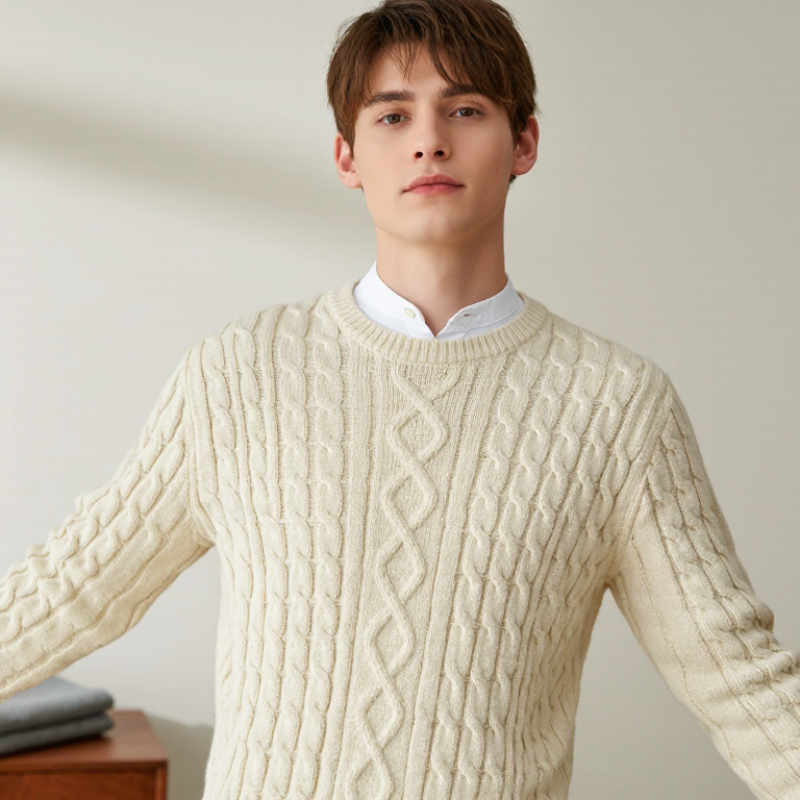
A cable knitted jumper is shaped by crossing stitches over one another. This creates raised lines, twists, and diamond-like panels. Simple rope cables look clean and versatile. Aran-style patterns feel heavier and more textured. Wide cables add visual volume, while narrow cables create a quieter surface. Consider your frame and wardrobe before choosing a pattern.
Construction matters as much as appearance. Check whether the jumper is fully fashioned, which means panels are shaped to follow the body. Look closely at the shoulder seams, cuffs, and underarm joins. They should lie flat without bulky ridges. A well-made jumper keeps its shape after movement. Try lifting your arms. The fabric should recover rather than sag.
Yarn changes the wearing experience. Wool offers warmth and natural elasticity. Cotton feels cooler but may hold less shape. Blended yarns can balance softness, strength, and easier care. Check the stitch density near the cables. Loose stitches may stretch, while overly tight stitches can feel stiff. I once chose a dramatic cable pattern that looked excellent on the hanger, but felt restrictive across the chest. That mistake still influences my fitting checks. Measure the jumper against a similar garment you already wear. Then inspect the care instructions carefully. Hand washing is not always practical. Nor is every soft yarn equally durable.
Wool provides reliable warmth because its fibers trap air. Merino usually feels softer around the neck. Cotton feels breathable but insulates less in cold wind. Blended yarns can balance comfort, strength, and price. Check the fiber percentages. Small changes matter.
Lightweight knits suit mild weather and fit neatly beneath coats. Medium-weight styles work well for commuting and cool offices. Heavy jumpers provide more warmth but may feel restrictive under sleeves. For active walks, excessive insulation can cause sweat. Sweat can make you colder later.
Look for the stated weight and fiber content. Dense stitches usually reduce heat loss. You can hold the knit toward a window. Large gaps may signal weaker insulation. Fit, wind, and cable depth also affect warmth. I sometimes underestimate wind exposure.
Cream pairs well with blue denim, charcoal trousers, and olive skirts. Navy suits beige chinos and grey trousers. Rust, camel, and muted mustard create a warmer autumn appearance. Strong yellow may look harsh under cool lighting. Choose a quieter color if your clothes already contain patterns.
A close fit retains warmth, but leave room for a thin base layer. Thick cables add visual volume. Relaxed shapes often look better with straight-leg or tailored bottoms. Slightly cropped styles suit high-waisted trousers. Try sitting and reaching. Comfort can defeat strict styling rules.
Check for even cables, firm seams, and secure stitching around the shoulders. Look closely for loose loops or sudden gaps. Stretch the cuff gently. It should recover without feeling brittle. Extreme softness can sometimes hide weak fibers. Weight alone proves little.
Follow the care label carefully. Wool often needs cool hand washing, mild detergent, and flat drying. Never hang it while wet. The shoulders may develop pointed bumps. Cotton can still shrink or lose shape. Care matters more.
Not always. Friction causes pilling beneath coat straps and around the elbows. Heavy pilling after limited wear deserves caution. Check for repair options and spare yarn. I once ignored the drying instructions. The jumper became shorter and rougher. That mistake still bothers me.
Choosing the best Cable Knitted Jumper starts with understanding its cable pattern and construction. Different twists, braids, and textures can affect both appearance and warmth, while a tightly knitted design usually offers better insulation and durability. Consider the fiber carefully: wool and wool blends provide natural warmth, cotton feels lighter and more breathable, and synthetic fibers may offer easy care and improved shape retention. The jumper’s weight should match your climate and layering needs.
A comfortable fit is equally important. Check the shoulders, sleeve length, body shape, and size guide to find a style that suits your proportions without feeling restrictive. Choose colors that complement your existing wardrobe, and decide whether you prefer a classic, relaxed, or contemporary silhouette. Finally, inspect the stitching, finishing, and fabric consistency, and review the care instructions before buying. A well-made jumper that is easy to maintain can provide lasting comfort, style, and value.

 FUJI